


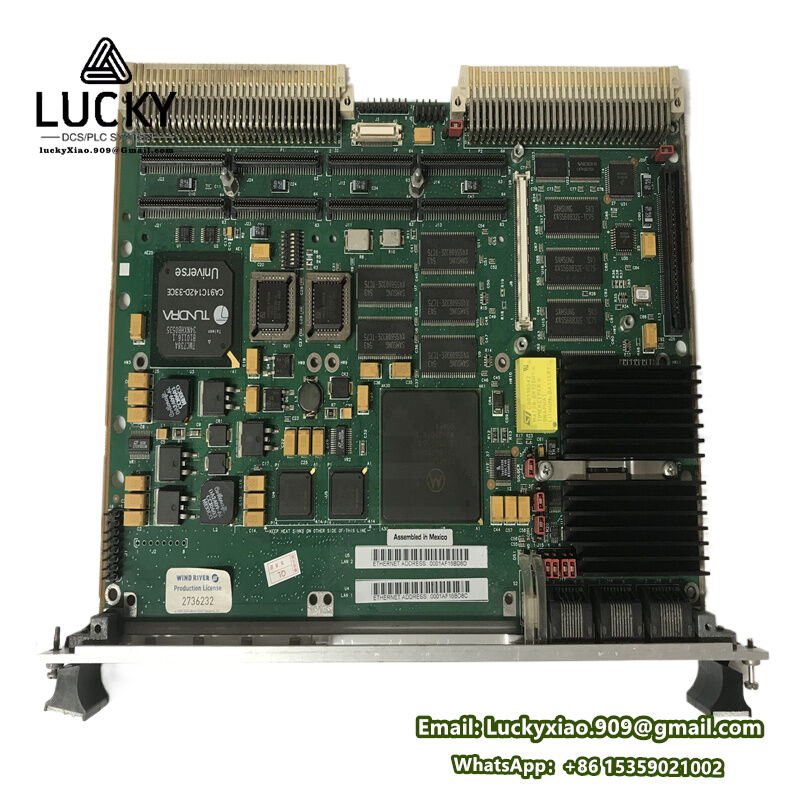
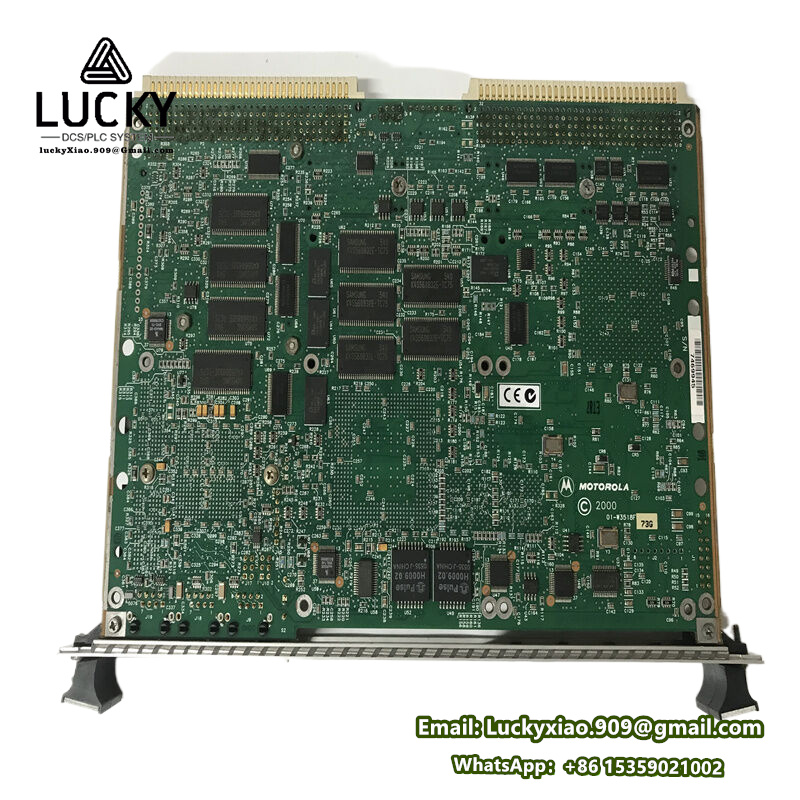
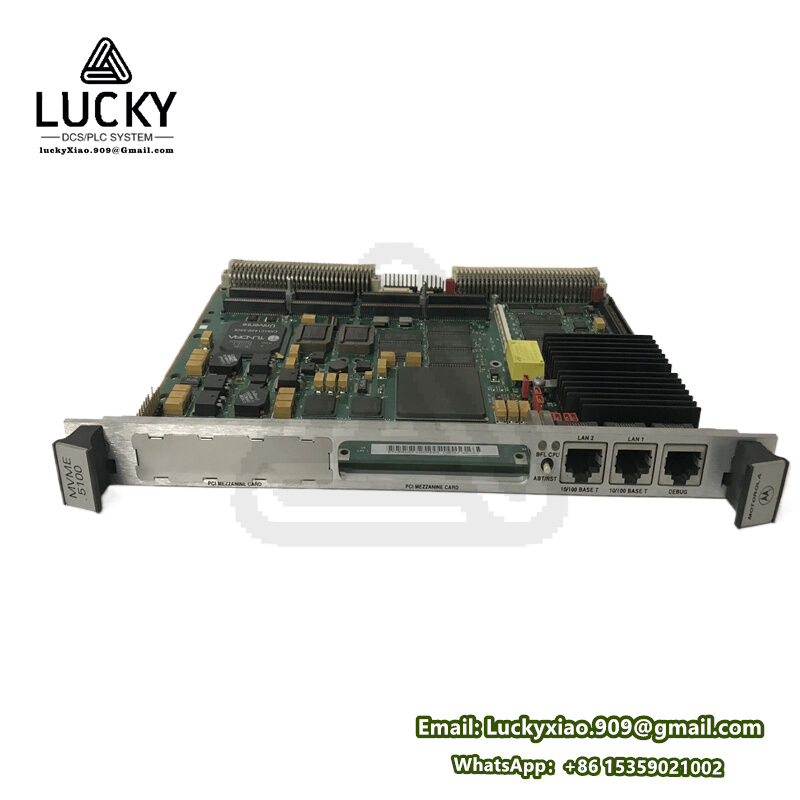
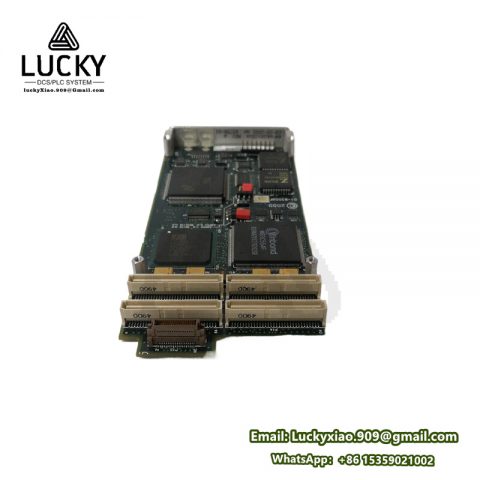
MOTOROLA MVME51005E-0163 Single-Board Computer
1. Product Overview
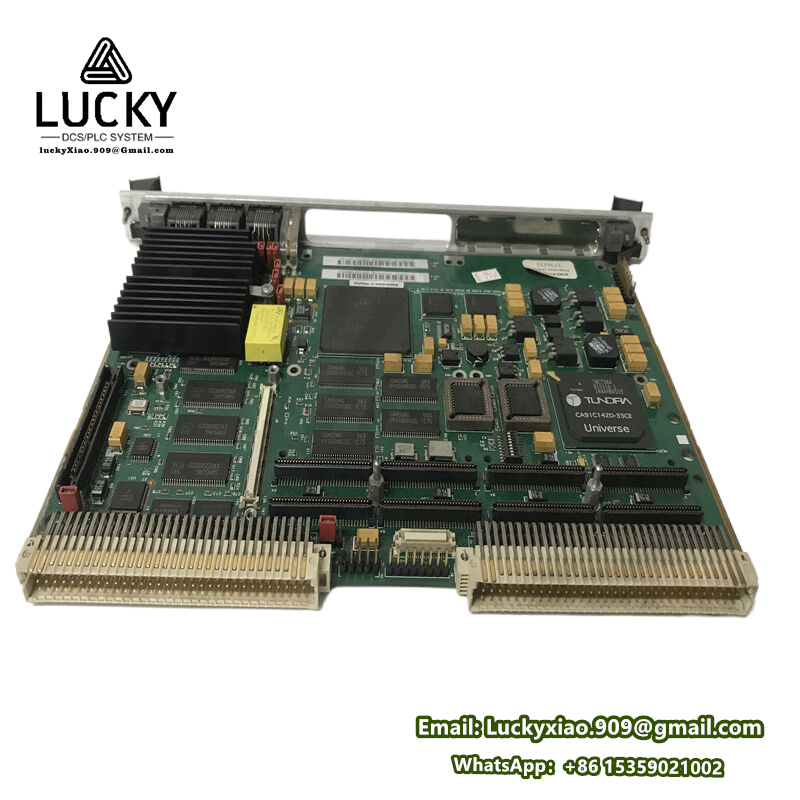
MOTOROLA MVME51005E-0163 is a rugged single-board computer (SBC) designed for industrial and embedded control systems. As the “processing core” of harsh-environment automation, it runs real-time operating systems (RTOS) to execute control logic, process sensor data, and communicate with peripheral devices—making it ideal for applications like aerospace testing, industrial robotics, and oilfield equipment control.
Think of it as a “tough industrial brain”: Unlike regular office computers, it can operate reliably in dusty factories, vibrating machinery cabins, or extreme temperature environments. For example, in a wind turbine control system, the MVME51005E-0163 collects data from wind speed sensors and vibration monitors, calculates the optimal blade angle, and sends commands to actuators—all while withstanding the turbine’s constant vibration and outdoor temperature changes.
Key strengths that make it stand out in harsh industrial scenarios:
-
Rugged Design: Built with industrial-grade components and a compact form factor, it resists shock (15G) and vibration (5G), suitable for mobile equipment like construction machinery.
-
Real-Time Performance: Powered by a high-efficiency Motorola processor, it executes real-time control tasks with minimal latency—critical for applications like factory automation where 1ms delays can cause production errors.
-
Flexible Expansion: Equipped with multiple I/O interfaces and expansion slots, it connects easily to sensors, actuators, and communication modules (e.g., Ethernet, RS-485).
-
Wide Environmental Adaptability: Operates in a temperature range of -40℃ to +70℃, making it suitable for both freezing cold warehouses and high-temperature industrial ovens.
Practical example: In an automotive assembly line, the MVME51005E-0163 controls a robotic arm for welding. It receives position signals from laser sensors (100 times per second), compares them with the target position, and adjusts the robotic arm’s movement—ensuring each weld is precise to 0.1mm. Even with metal dust and mechanical vibration around, it maintains stable operation 24/7.
2. Key Technical Specifications
|
Specification Category
|
Details
|
|---|---|
|
Typical Applications
|
Industrial robotics, aerospace testing, oilfield control, automotive manufacturing, and harsh-environment automation
|
|
Processor & Memory
|
Motorola PowerPC processor (800MHz); 512MB DDR SDRAM; 1GB Flash memory (for OS and programs)
|
|
I/O Interfaces
|
2 x Ethernet ports (10/100Mbps); 4 x RS-232/485 serial ports; 2 x USB 2.0 ports; 1 x VGA port
|
|
Expansion Slots
|
1 x PCI-104 slot (for analog I/O or communication modules); 1 x CompactFlash slot (for data storage)
|
|
Operating System Support
|
VxWorks, QNX, Linux (real-time versions); Compatible with Motorola’s MVME software tools
|
|
Power Supply
|
12-24V DC input; Power consumption: ≤25W (full load)
|
|
Environmental Resistance
|
Operating temperature: -40℃–+70℃; Shock resistance: 15G (11ms); Vibration resistance: 5G (10-2000Hz)
|
|
Physical Specifications
|
Dimensions: 165mm×102mm×25mm (L×W×H); Weight: ~300g; Mounting: DIN rail or panel mount
|
|
Certifications
|
UL, CE, IEC 60068-2 (environmental testing), ISO 9001
|
3. System Integration Guide
Integrating the MVME51005E-0163 is straightforward—focus on connecting peripherals, installing the RTOS, and loading control programs. Follow these steps for safe and reliable integration:
3.1 Integration Steps (with Safety Tips)
-
Power Preparation: Use a 12-24V DC power supply with over-voltage protection. Ensure the power supply can provide at least 3A current to avoid system instability.
-
Mounting the SBC: Install the board on a DIN rail or panel using the provided brackets. Ensure the mounting surface is flat to reduce vibration transfer.
-
Peripheral Wiring: Connect sensors (e.g., temperature, pressure) to the RS-485 or analog I/O modules (installed in the PCI-104 slot).
-
Link actuators (e.g., motor drivers) to the digital output terminals. Use shielded cables for wiring in noisy environments (e.g., near high-voltage equipment).
-
Connect the Ethernet port to the industrial network for remote monitoring and program updates.
-
OS & Program Installation: Install a real-time OS (e.g., VxWorks) via the CompactFlash slot or Ethernet.
-
Load the control program (written in C/C++) using Motorola’s development tools (e.g., Tornado IDE).
-
Configure I/O addresses to map sensors/actuators to the program (e.g., set RS-485 Port 1 for wind speed sensor data).
-
Test & Verification: Power on the system—check the power LED (green = normal, red = fault).
-
Simulate sensor signals (e.g., send a 25℃ temperature signal) and confirm the SBC processes the data and sends correct actuator commands.
-
Test vibration resistance: Run the system while applying mild vibration (e.g., near a small motor) to ensure no data loss or program crashes.
3.2 Daily Maintenance Tips
-
Daily Check: Monitor the status LEDs and remote network data—ensure the SBC communicates normally and processes tasks without delays.
-
Monthly Inspection: Clean dust from the board’s ventilation holes with compressed air (low pressure). Check wiring terminals for looseness (vibration can cause connections to shift).
-
Quarterly Backup: Back up the OS and control program to a secure storage device—prevent data loss due to unexpected faults.
-
Fault Handling: If the SBC fails to start, first check the power supply and wiring. If normal, use the diagnostic tool in the development software to read fault codes (e.g., “E02” = memory error).
4. Recommended MOTOROLA Related Models (Different Series)
Motorola offers a range of rugged embedded computing products for diverse harsh-environment needs. Below are practical models from different series:
|
Model
|
Series
|
Key Features & Application Scenarios
|
|---|---|---|
|
MOTOROLA MVME2100
|
MVME2000 Series
|
Entry-level rugged SBC (400MHz PowerPC). Suitable for simple control tasks like small-scale water treatment systems—cost-effective and compact.
|
|
MOTOROLA MVME6100
|
MVME6000 Series
|
High-performance SBC (1.2GHz dual-core). Ideal for complex applications like aerospace test benches—supports multiple expansion modules for data acquisition.
|
|
MOTOROLA MVME3100
|
MVME3000 Series
|
Fanless rugged SBC. Designed for dust-sensitive environments like food processing plants—no moving parts, reducing maintenance needs.
|
|
MOTOROLA MVME5500
|
MVME5000 Series
|
Redundant SBC for critical systems (e.g., nuclear power plant auxiliary control). Automatically switches to backup hardware if the main board fails.
|
|
MOTOROLA MVME7100
|
MVME7000 Series
|
Ethernet-rich SBC (4 x Gigabit Ethernet ports). Suitable for distributed control systems (e.g., oilfield wellhead monitoring) needing multiple network connections.
|
|
MOTOROLA MVME162
|
Legacy MVME Series
|
Vintage rugged SBC for upgrading old industrial systems (e.g., 1990s-era manufacturing equipment) that require replacement parts.
|
There are no reviews yet.