


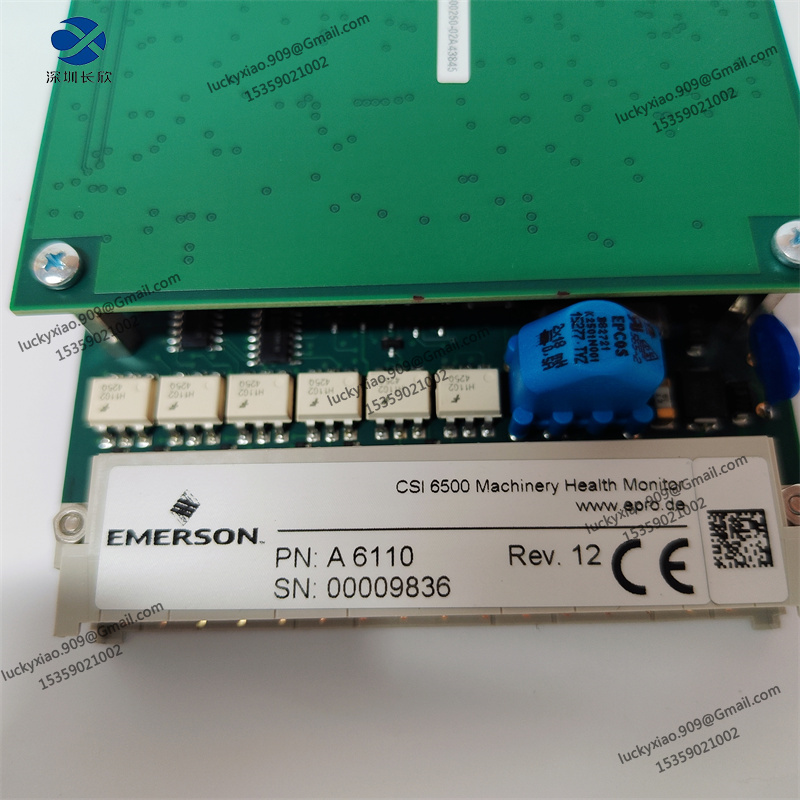
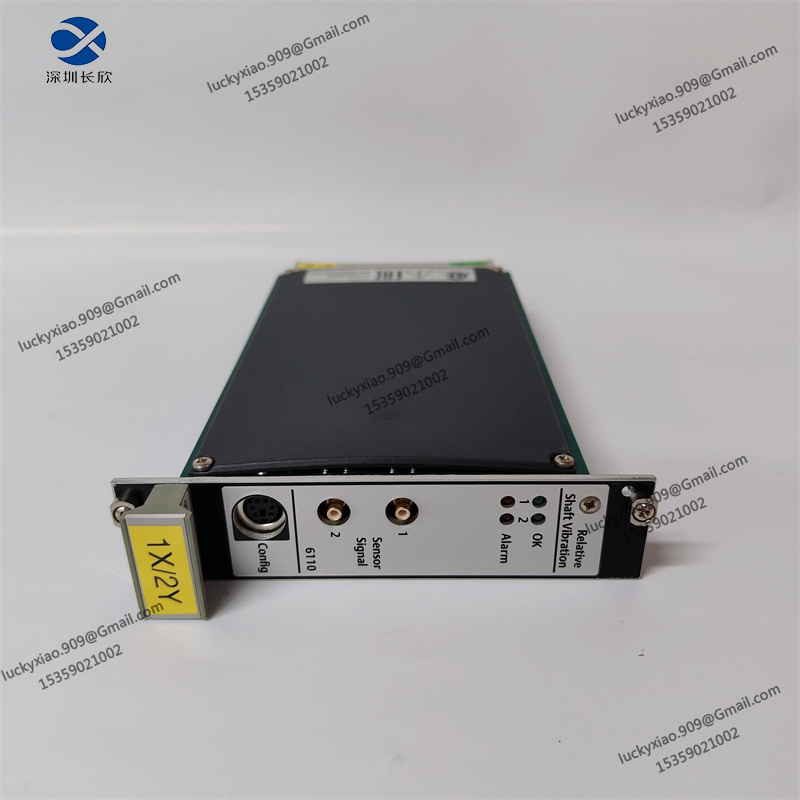
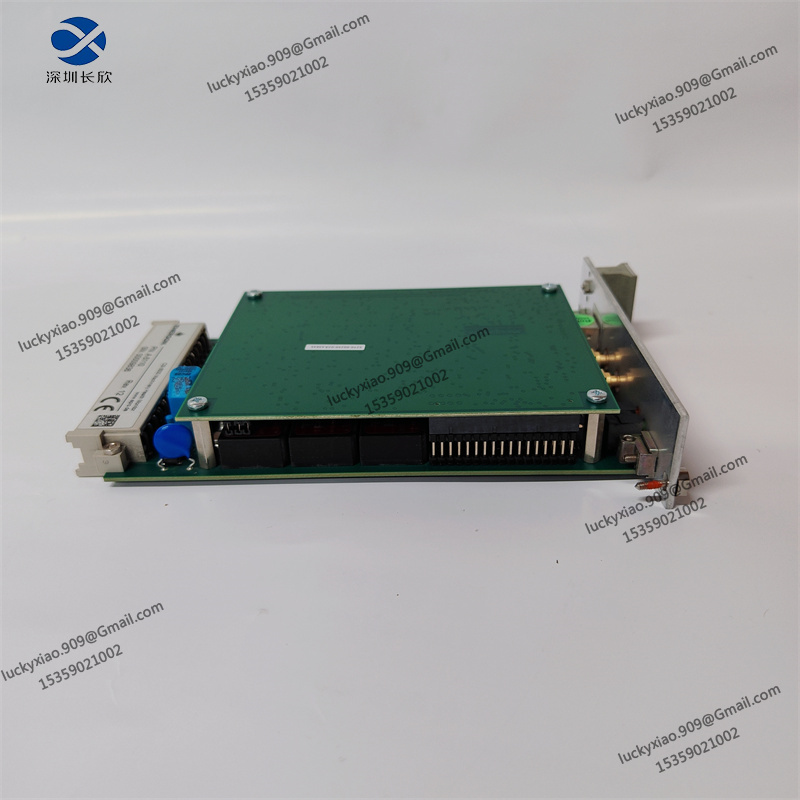
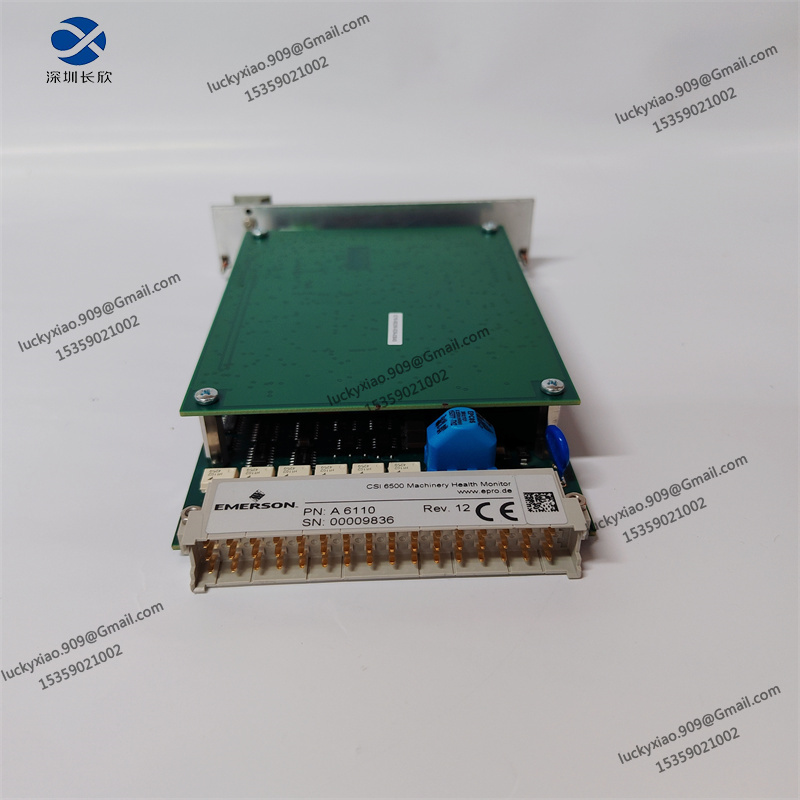
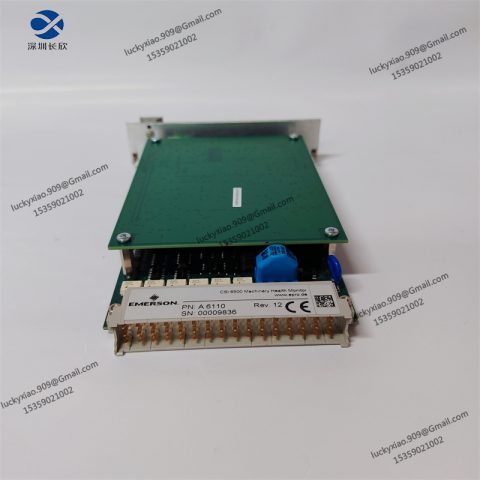
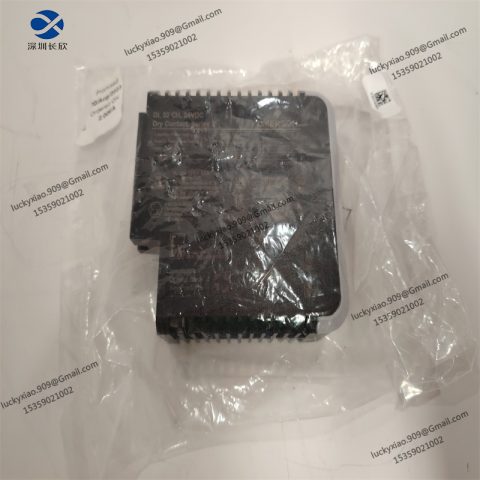
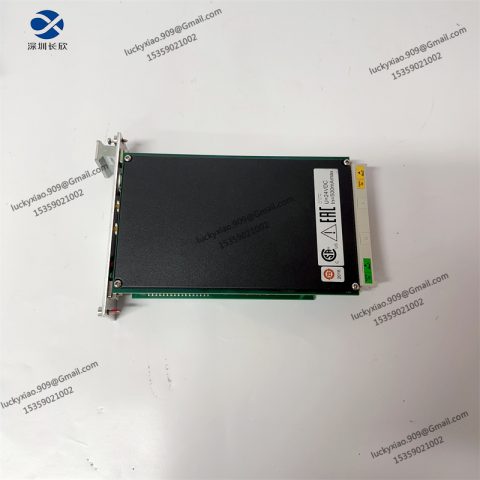
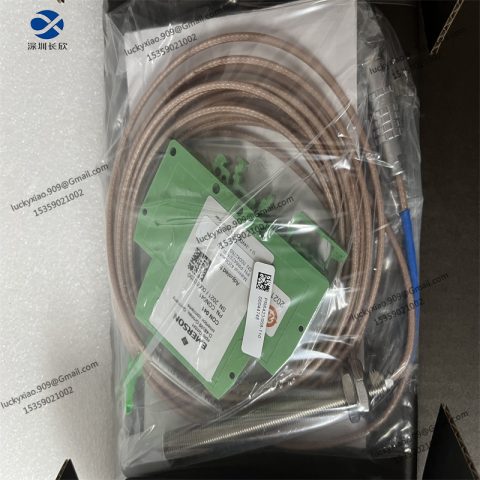
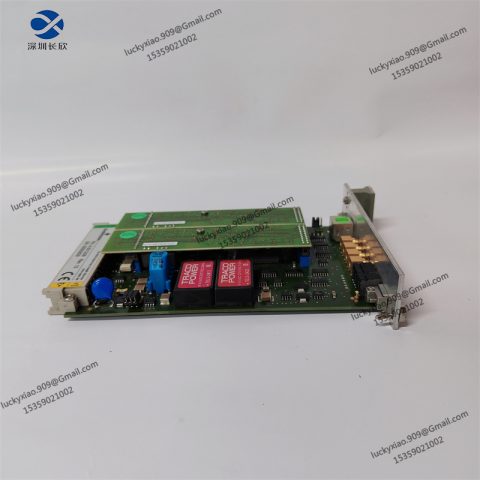
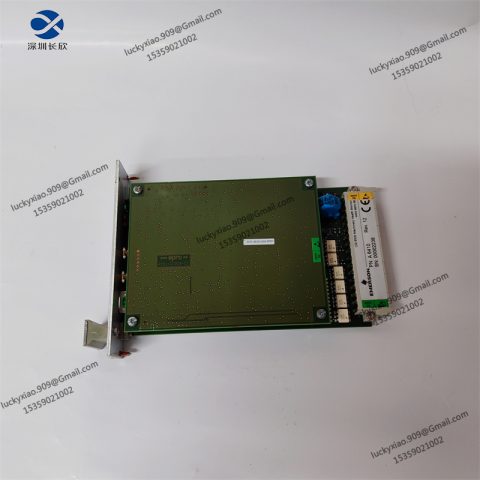
Emerson A6110 is a dual – channel shaft relative vibration monitor tailored for the AMS 6500 mechanical health monitoring system. It is specialized in monitoring the shaft vibration of rotating machinery with sleeve bearings, supporting eddy current or differential inputs, and its two channels can work independently to measure axial, radial or tangential vibrations within a 0.1 – 1000Hz frequency range. It provides reliable 0/4 – 20mA current outputs and 0 – 10VDC voltage outputs with ±1% accuracy, along with configurable alert and danger alarms. With galvanic isolation from the power supply and open/short – circuit proof design, it operates stably in 0°C – 65°C environments with 5%-95% non – condensing humidity. It can integrate with other AMS 6500 monitors to form a complete API 670 machinery protection system, and transmits data via Modbus TCP/IP. Widely used in steam turbines, gas turbines and compressors, it helps detect faults like bearing wear early and safeguards the safe operation of critical industrial equipment.
Emerson’s Ovation system is a distributed control system (DCS) specifically designed for the power generation and water/wastewater treatment industries. As a reliable innovation platform, it provides comprehensive control capabilities and powerful system integration. The main components of Ovation system include:
1. Host: It is the core of the entire system, responsible for data processing, storage, and forwarding, as well as controlling the execution of logic.
2. Screen: It is an interface for users to interact with the system, used to display real-time data, alarm information, trend charts, etc., and allows users to set parameters and control operations.
3. Sound system: Provides sound alarm function. When the system detects abnormal situations or faults, it will emit sound prompts through the sound system, so that operators can respond in a timely manner.
4. Projector: In some applications, it may be used for large screen display, allowing multiple people to simultaneously view system status and operation information.
5. Touch devices: such as touch screens, provide an intuitive operating interface, allowing users to easily perform various controls and settings.
6. Control system: including control logic, algorithms, and strategies, used to achieve precise control of industrial processes.
7. I/O modules and interfaces: used for connecting and exchanging data with external devices such as sensors, actuators, etc. These modules can convert signals from external devices into digital signals that the system can recognize, or convert control signals from the system into instructions that external devices can execute.
8. Communication and network equipment: Ensure data communication and information sharing between internal components of the system and between the system and other external systems.
9. Software and firmware: including operating systems, control software, databases, etc., to provide necessary support and guarantees for the normal operation of the system.
For more detailed information, please click here:https://www.szcxgk.com/chanpinzhongxin/
There are no reviews yet.