





1. IS200VCRCH1B Product Overview
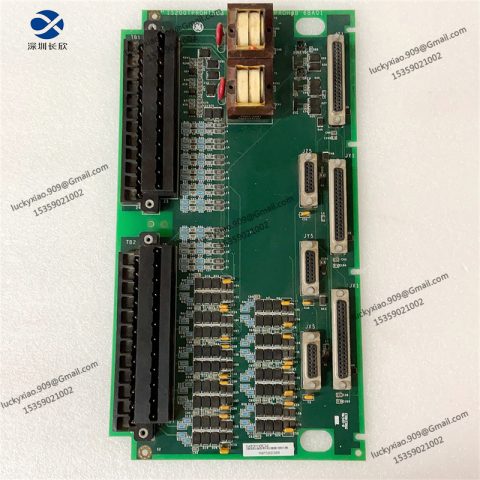
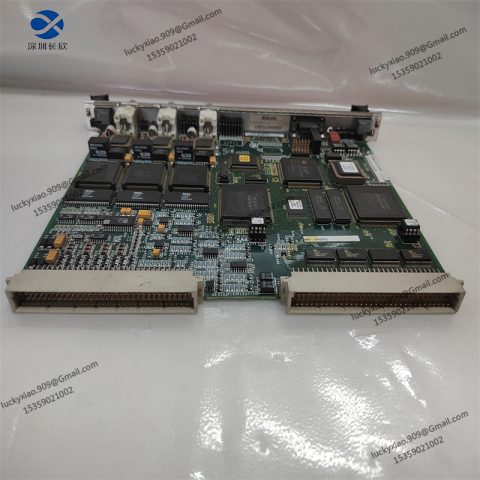
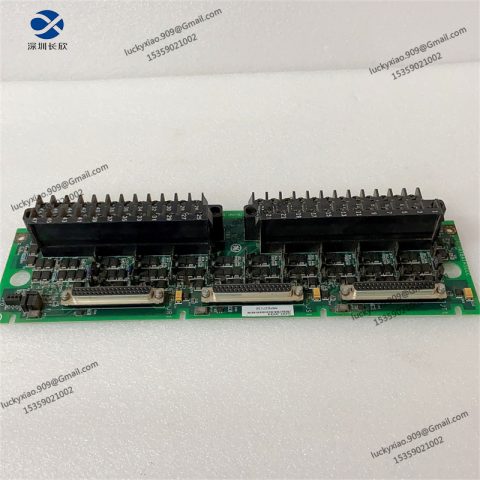
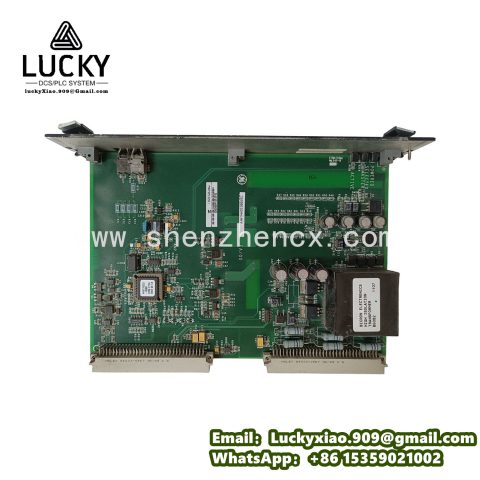
GE IS200VCRCH1B is a high-density triple-modular redundant discrete I/O board. Specifically, it belongs to the GE Speedtronic Mark VI turbine control system family. Notably, it integrates massive discrete signal input and relay output functions. On top of that, it undertakes core turbine protection and auxiliary equipment control tasks. Ultimately, it guarantees high-fault-tolerance and stable logic control for power generation units.
2. IS200VCRCH1B Core Technical Specifications
To begin with, this module features abundant high-density channel resources. Primarily, it configures 48 independent discrete contact input channels. Importantly, it collects field switch states, breaker positions and equipment status signals. As a result, it covers full-range on-site discrete monitoring demands. Furthermore, it supports multi-point synchronous signal acquisition.
Apart from input channels, it owns powerful relay output capacity. Specifically, it integrates 24 reliable relay and solenoid output channels. Meanwhile, it supports on-site actuator driving and logic switching operations. Correspondingly, it executes protection tripping and equipment control commands accurately. Additionally, it ensures fast response to system logic instructions.
Beyond channel configuration, it adopts professional TMR redundant architecture. Specifically, it applies triple modular redundant control design for core circuits. Therefore, it eliminates single-point failure risks thoroughly. Moreover, it maintains normal operation even with partial circuit anomalies. Consequently, it greatly improves system safety and fault tolerance level.
Furthermore, it delivers excellent environmental and operational stability. Specifically, it operates steadily from -40°C to +70°C ambient temperatures. Therefore, it adapts harsh thermal cycling environments in power plants. Moreover, it works under 5%–95% non-condensing humidity. Consequently, it resists thermal aging and moisture erosion for long-cycle operation.
3. Hardware Design & Structural Advantages
First and foremost, it adopts a single-slot compact rack-mounted structure. Accordingly, it fits standard Mark VI cabinet slot specifications perfectly. Meanwhile, it features high circuit integration and space-saving layout. Besides, it requires no additional daughterboard assembly. For this reason, it saves cabinet space and simplifies system configuration.
In addition to structural merits, it builds multi-level industrial protection design. Specifically, it integrates built-in surge suppression and over-current protection circuits. Meanwhile, it complies with strict EMC electromagnetic shielding standards. Furthermore, it isolates signal crosstalk between adjacent channels. Thus, it prevents false triggering and signal interference onsite. As a result, it stabilizes whole-system logic judgment accuracy greatly.
Furthermore, it adopts durable industrial-grade hardware design. Naturally, it uses high-reliability relay components and anti-aging PCB materials. Hence, it supports long-term continuous full-load operation. Meanwhile, it equips standard locking terminal interfaces. Accordingly, it ensures firm wiring and simplifies daily maintenance and module replacement.
4. Functional Characteristics & Application Value
In terms of core functions, it undertakes key turbine logic control tasks. Specifically, it acquires real-time discrete status signals from field devices. Then, it transmits valid signal data to main control boards. Moreover, it outputs relay driving signals to control auxiliary equipment. Thereby, it supports turbine protection interlock and sequence control. Also, it ensures safe and orderly unit operation.
Besides basic I/O functions, it enhances system operational reliability. Namely, its TMR architecture adapts safety-critical power generation scenarios. Accordingly, it meets high-standard turbine protection requirements. Thus, it applies widely to gas turbine and steam turbine Mark VI control systems. Ultimately, it reduces unplanned downtime and improves system operational safety margins.
5. Recommended Similar Series Models
Lastly, the GE Mark VI VCRC discrete control series includes diverse compatible I/O modules. Specifically, they meet different channel density and redundant control demands. For your reference, below are practical mainstream matching models.
IS200VCRCH1A: First, it is a classic standard discrete I/O module. Specifically, it retains core TMR redundant control and basic channel functions. Moreover, it features mature and stable field performance. Therefore, it suits conventional Mark VI system configurations. Meanwhile, it maintains full structural and electrical compatibility. Additionally, it provides cost-effective standard operation.
IS200VAICH1DAB: Firstly, it acts as a matched analog signal processing module. Notably, it undertakes analog signal acquisition and output tasks. Thus, it complements VCRC discrete signal functions. Furthermore, it builds hybrid analog and discrete monitoring systems. For this reason, it enriches overall system parameter monitoring capability.
IS200STCIH2A: Primarily, it is a dedicated discrete terminal input board. Importantly, it expands multi-channel dry contact signal collection resources. Specifically, it cooperates with VCRC modules for signal expansion. Furthermore, it improves system field signal coverage. As a result, it meets large-scale multi-point monitoring demands.
IS230SNCIH6A: Basically, it is a high-speed serial communication module. Notably, it transmits real-time I/O status data of VCRC modules. Specifically, it supports low-latency multi-protocol data interaction. Furthermore, it optimizes system data transmission efficiency. Consequently, it forms complete signal collection and transmission closed loops.



There are no reviews yet.